Exosome-Producing Strain Engineering & Fermentation Optimization Service
OverviewServiceSamplesAdvantagesCase StudyFAQs
Overview
Service Overview
Microbial extracellular vesicles (EVs), including bacterial outer membrane vesicles (OMVs) and yeast-derived exosome-like vesicles, have emerged as a transformative class of natural drug delivery vehicles and vaccine platforms. Their inherent biocompatibility, ability to cross biological barriers, and capacity for functional cargo loading position them at the forefront of next-generation biotherapeutics. However, the transition from laboratory proof-of-concept to scalable, reproducible manufacturing remains constrained by several critical bottlenecks: inherently low vesicle secretion efficiency in wild-type hosts, poor batch-to-batch production consistency, limited therapeutic cargo loading capability, and significant challenges in fermentation scale-up.
At Creative BioMart Microbe, we address these limitations through an integrated Strain Engineering + Fermentation Optimization + Characterization platform. Our service spans the complete development continuum—from high-throughput screening of natural microbial exosome producers, precision genome editing for enhanced secretion and cargo loading, design-of-experiments (DoE) driven fermentation process development, to the establishment of stable, industrial-grade production platforms. By unifying upstream strain engineering with downstream bioprocess optimization under a single project management framework, we enable clients to advance microbial EV candidates from strain construction to pilot-scale production without the fragmentation and timeline delays typical of multi-vendor workflows. As the upstream foundation of our Microbial Exosome Services ecosystem, this service supplies high-yield strains and optimized fermentation outputs to isolation & purification, characterization, and functional validation pipelines.
Supported Microbial Hosts
Our platform is validated across a broad spectrum of bacterial and yeast hosts, allowing us to match the optimal chassis to your target application, payload requirements, and regulatory strategy.
| Host Category |
Supported Strains |
| Gram-Negative Bacteria |
Escherichia coli Nissle 1917, E. coli BL21 (DE3), Pseudomonas putida |
| Gram-Positive Bacteria |
Lactobacillus plantarum, Lactococcus lactis, Bacillus subtilis |
| Yeast Systems |
Saccharomyces cerevisiae, Pichia pastoris |
Platform Capabilities & Applications
Platform Capabilities
- High-throughput screening and identification of natural or industrial microbial exosome-producing strains.
- CRISPR/Cas-mediated genome editing and scarless marker-free knockout for secretion pathway remodeling.
- Membrane remodeling and vesicle secretion pathway enhancement via validated targets (tolA, tolR, nlpI, mlaE).
- Metabolic flux redirection and competing pathway elimination to maximize carbon allocation toward vesicle biogenesis.
- Chromosomal integration and antibiotic-free stable expression system development.
- Shake-flask to pilot-scale (30–200 L) fermentation process development with DoE optimization.
- Comprehensive exosome characterization and quality control, including nanoparticle tracking analysis (NTA), dynamic light scattering (DLS), transmission electron microscopy (TEM), and protein quantification. For full analytical packages, see our Exosome Characterization & Quality Analytics service.
Typical Applications
- Drug delivery system development
- Vaccine and adjuvant research
- RNA (mRNA, siRNA, miRNA) delivery platforms
- Therapeutic protein and enzyme delivery
- Microbiome therapeutics and live biotherapeutic products
- Immunomodulation and immune cell targeting studies
- Industrial-scale microbial EV production for diagnostic or cosmetic applications

Figure 1. Overview of the integrated microbial extracellular vesicle (EV) engineering and fermentation optimization platform at Creative BioMart Microbe. The workflow unites strain screening, CRISPR-based genome engineering, bioreactor process optimization, and comprehensive QC characterization into a single development pipeline.
Creative BioMart Microbe offers end-to-end microbial exosome engineering and fermentation optimization services, from initial strain evaluation to validated pilot-scale production. Contact us for a custom quote.
Our Service
Service Workflow

Service Details
Exosome Strain Screening & Identification
We systematically screen microbial isolates, probiotic strains, and industrial libraries to identify high-yield extracellular vesicle producers. Each campaign evaluates 50–200 candidates via NTA, DLS, TEM, growth kinetics, and fermentation compatibility. This data-driven approach delivers a ranked candidate list with quantitative metrics, eliminating subjective selection.
Engineered Strain Development for Enhanced EV Secretion
We engineer microbial chassis for enhanced vesicle secretion. Our toolkit includes CRISPR/Cas9-mediated scarless knockout of membrane stability genes to substantially boost OMV yields over wild-type, plus protein engineering and metabolic optimization. For multiplex projects, sequential λRed-CRISPR/Cas9 editing cumulatively introduces up to 3–5 modifications per project cycle, maintaining long-term genetic stability.
Exosome Fermentation Process Development
We develop scalable fermentation processes for engineered exosome-producing strains. Using DoE, we optimize medium composition, dissolved oxygen, pH, temperature, and induction timing. Scale-up spans shake-flask to 1–10 L bioreactor and 30–200 L pilot refinement with fed-batch transition, targeting 3- to 20-fold yield improvement and batch-to-batch CV below 15%.
Service Specifications
 Strain Engineering Capability
- Supported engineering methods: CRISPR/Cas9 genome editing, λRed recombineering, plasmid-based expression, and chromosomal integration
- Deletion size per event: 500 bp–10 kb (non-essential genes; essential genes require prior feasibility assessment)
- Multiplex editing: Sequential knockout of up to 3–5 genetic targets per project cycle
- Supported payloads: Proteins, peptides, RNA species, enzymes, and antigens
- Engineering options: Marker-free scarless knockout or antibiotic marker retention
Fermentation Scale & Improvement Metrics
- Production scales: Shake flask (50 mL–5 L), bench-scale bioreactor (1–10 L), pilot-scale fermentation (30–200 L)
- EV secretion enhancement via engineering: 2–15 fold over wild-type baseline
- Additional yield improvement via fermentation optimization: 3–20 fold
- Batch reproducibility target: CV < 15%
- Stable fermentation duration: 24–120 hours depending on host species and metabolic load
Success Rate & Stability
- Single gene knockout success rate: ≥95%
- Multiplex sequential knockout success rate: ≥85%
- Stable expression retention: ≥90% after 20 generations under non-selective conditions, verified by genotype PCR + qPCR transcript quantification + (where applicable) Western blot of payload protein.
Turnaround Time
| Project Type |
Timeline |
| Strain screening & identification |
2–4 weeks |
| Standard strain engineering (single gene) |
3–5 weeks |
| Fermentation optimization (shake flask) |
3–5 weeks |
| Fermentation optimization (bioreactor) |
4–8 weeks |
| Stable production platform development |
6–10 weeks |
| Pilot-scale process development |
8–12 weeks |
Timeline may vary based on host strain complexity, gene target difficulty, and fermentation scale. Custom quotes available for expedited projects.
Deliverables
- Engineered or screened microbial strains
- Sequence verification report with plasmid/vector maps
- Fermentation optimization SOP and medium formulation recommendations
- Exosome characterization report (NTA, DLS, TEM, protein quantification)
- Stability assessment report (serial passage evaluation and productivity retention analysis)
- Detailed protocol summary and strain genotype description
- QC documentation suitable for publication or regulatory submission
- Fermentation supernatants and harvested culture broths, formatted for direct handoff to downstream isolation and purification, with optional transition to engineering, manufacturing, and formulation programs
Quality Control
- Strain QC: Sequence verification, genotype confirmation by PCR, stability testing, and contamination testing
- Exosome QC: Nanoparticle tracking analysis (NTA), dynamic light scattering (DLS), transmission electron microscopy (TEM), protein quantification, and sterility testing
Sample Requirements
| Required Information |
Optional Information |
Not Accepted |
| Host strain designation (e.g., E. coli Nissle 1917, S. cerevisiae) |
Target yield expectations for exosome production |
Unknown pathogenic strains without prior biosafety consultation |
| Target application (e.g., drug delivery, vaccine, RNA delivery) |
Existing fermentation conditions and historical data |
Incomplete biosafety documentation or strain certification |
| Payload sequence, if applicable (protein, RNA, or antigen sequence in FASTA/GenBank format) |
Preference for marker-free scarless knockout versus marker retention |
Unverified, unstable plasmid constructs without sequence confirmation |
| Existing engineering background or prior modification history |
Special culture conditions, selective media, or anaerobic requirements |
Essential gene knockout requests without a pre-approved conditional strategy |
| Biosafety level and handling requirements |
Preferred expression system or promoter architecture |
|
Accepted Sample Types
| Sample Type |
Recommended Format |
| Microbial strain |
Glycerol stock |
| Plasmid DNA |
≥200 ng/μL, sequence-verified |
| Gene sequence |
FASTA or GenBank file |
| Fermentation samples |
≥50 mL with documented culture conditions |
Our Advantages
- Integrated One-Stop Microbial EV Platform: We consolidate strain screening, engineering, fermentation, and QC under one platform to accelerate concept-to-pilot development.
- High-Yield Engineered Chassis Library: We construct high-yield chassis using validated membrane remodeling targets, achieving 2- to 180-fold yield improvements over wild-type.
- Broad Host Compatibility: Our platform spans Gram-negative, Gram-positive, and yeast hosts for flexible, application-driven chassis selection.
- DoE-Driven Fermentation Optimization: We apply DoE methodology to optimize fermentation parameters and secure batch-to-batch consistency below 15% CV.
- Scalable Production Capability: We support seamless scale-up from shake-flask screening to 200 L pilot-scale production with full process mapping.
- Comprehensive Characterization & QC: Every project includes standardized NTA, DLS, TEM, and protein quantification to ensure robust quality assurance.
Case Study
Case Study 1: Fermentation Process Optimization Enhances Probiotic EV Yield and Functionality
A published study systematically modulated culture parameters to optimize probiotic extracellular vesicle (EV) production from Lacticaseibacillus rhamnosus. The researchers demonstrated that full-strength broth introduced significant contaminants that compromised EV purity and identification. Reducing broth concentration to 50% simultaneously decreased contaminants and increased EV yields by approximately eight-fold. Acidic pH (3.5) further boosted production, achieving the highest EV concentrations under 50% broth at 72 h. However, maximum yield did not correlate with optimal therapeutic efficacy: only EVs produced at pH 5.5 exhibited confirmed antimicrobial activity against Staphylococcus aureus, whereas high-yield pH 3.5 EVs showed none. This work underscores that fermentation process optimization must balance productivity with functional validation, as yield alone is insufficient to guarantee biological activity.

Figure 2. Effect of modulated culture conditions on LREV yield and purity. (Lei, et al. 2024)
Case Study 2: Magnetic Nanoparticle Stimulation Enhances E. coli OMV Secretion and Harvesting Yield
A published study demonstrated that culturing E. coli in the presence of PEGylated magnetic iron-oxide nanoparticles (MNPs) significantly upregulated genes involved in the OMV secretory pathway, including ATP synthase and Sec transport complexes, as revealed by transcriptome analysis. PEGylation was essential for bacterial MNP uptake; unmodified MNPs aggregated and failed to enhance secretion. This culture condition modulation increased OMV harvesting yields by approximately 60-fold compared to conventional ultracentrifugation, based on both protein and lipopolysaccharide quantification. Magnetically harvested OMVs retained similar physicochemical properties and bacterial uptake efficiency as those obtained by standard methods. The study illustrates how environmental stimuli during fermentation can be leveraged to substantially boost microbial vesicle productivity without compromising functional integrity.
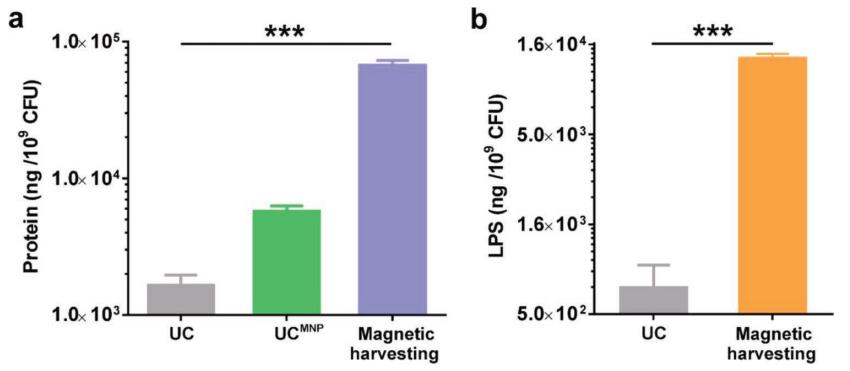
Figure 3. Comparison of OMV harvesting yields from E. coli cultured with PEGylated MNPs. (Shi, et al. 2022)
FAQs
Q: What microbial hosts do you support?
A: We support a diverse panel of microbial hosts, including Gram-negative bacteria (E. coli Nissle 1917, E. coli BL21 (DE3), Pseudomonas putida), Gram-positive bacteria (Lactobacillus plantarum, Lactococcus lactis, Bacillus subtilis), and yeast systems (Saccharomyces cerevisiae, Pichia pastoris). If you wish to use a custom host strain, please provide complete genotype information, growth parameters, and biosafety classification so we can assess editing feasibility and fermentation compatibility.
Q: Can you engineer strains for therapeutic cargo loading?
A: Yes. We offer specialized cargo loading optimization services for proteins, peptides, RNA species (including mRNA and siRNA), enzymes, and antigens. Our strategies include fusion protein design with membrane anchor sequences, signal peptide optimization for periplasmic or luminal loading, and surface display engineering for targeted cell recognition. Each loading strategy is validated by Western blot, NTA, and functional activity assays.
Q: What fermentation scales are available?
A: Our fermentation development pipeline covers shake-flask (50 mL–5 L), bench-scale bioreactor (1–10 L), and pilot-scale (30–200 L) production. The optimal scale for your project is determined during the initial consultation based on target particle yield, timeline, and budget. We also provide scale-up feasibility assessments to map the path from laboratory to pilot manufacturing.
Q: Do you provide stable genome-integrated systems?
A: Yes. We offer chromosomal integration services to eliminate plasmid burden and antibiotic selection pressure. Integrated constructs are subjected to long-term stability testing across ≥20 generations under non-selective conditions to confirm expression retention rates ≥90%. This option is strongly recommended for industrial production strains and regulatory-sensitive applications.
Q: How do you evaluate exosome quality?
A: Our standard QC package includes nanoparticle tracking analysis (NTA) for particle concentration and size distribution, dynamic light scattering (DLS) for polydispersity index, transmission electron microscopy (TEM) for morphological validation, protein quantification (BCA or Bradford), and sterility testing. Optional functional assays, such as cell uptake efficiency or in vitro activity testing, can be added upon request.
Q: What exosome size range is typically produced?
A: Microbial extracellular vesicles typically exhibit a size distribution of 20–300 nm (mode ~50–150 nm for bacterial OMVs), consistent with current OMV literature (Toyofuku et al., 2019; MISEV2023). Exact mean diameter and polydispersity vary by host species, genetic background, and engineering strategy. We report detailed size metrics for every strain and process condition evaluated.
Q: Can clients provide their own strains?
A: Yes. We accept client-provided strains provided they are accompanied by complete genotype documentation, growth parameters, and biosafety information. We perform an initial feasibility assessment to confirm editing compatibility, fermentation behavior, and EV baseline productivity before project initiation.
Q: What is the typical project timeline?
A: Standard timelines are as follows: strain screening and identification, 2–4 weeks; single-gene strain engineering, 3–5 weeks; shake-flask fermentation optimization, 3–5 weeks; bioreactor fermentation optimization, 4–8 weeks; stable production platform development, 6–10 weeks; and pilot-scale process development, 8–12 weeks. These timelines are modular and can be combined or executed sequentially based on project scope.
Q: Do you support pilot-scale production?
A: Yes. We support pilot-scale fermentation up to 200 L for microbial exosome production. Each pilot project includes a pre-scale-up engineering review, process parameter mapping, and batch reproducibility validation to ensure that laboratory-optimized conditions translate robustly to larger volumes.
Q: Can you optimize downstream purification compatibility?
A: Yes. We design fermentation processes with downstream purification in mind. During process development, we can optimize cell density, medium composition, and harvest timing to maximize compatibility with tangential flow filtration (TFF), size-exclusion chromatography (SEC), and affinity chromatography workflows. This integrated approach reduces purification yield loss and improves final product purity.
References:
- Lei, Q., et al. (2024). Bioprocessing strategies for enhanced probiotic extracellular vesicle production: culture condition modulation. Frontiers in Bioengineering and Biotechnology, 12, 1441552.
- Shi, R., et al. (2022). High‐yield, magnetic harvesting of extracellular outer‐membrane vesicles from Escherichia coli. Small, 18(48), 2204350.
Related Services:


